Every web application encounters situations where something does not go as expected. A server may become unavailable, a user may submit incomplete information, or a database request may fail.
How an application responds to these situations can make a significant difference to the user experience. This is why error handling is an important skill for web developers.
What Happens When an Application Fails?
Imagine a user filling out a registration form only to receive a blank screen after clicking the submit button. Without a clear message, the user may not know whether the information was saved or whether they need to try again.
Good error handling helps applications respond to problems in a controlled and understandable way. Instead of displaying confusing technical details, the interface can provide a useful message and explain what the user can do next.
Error Handling Across the MERN Stack
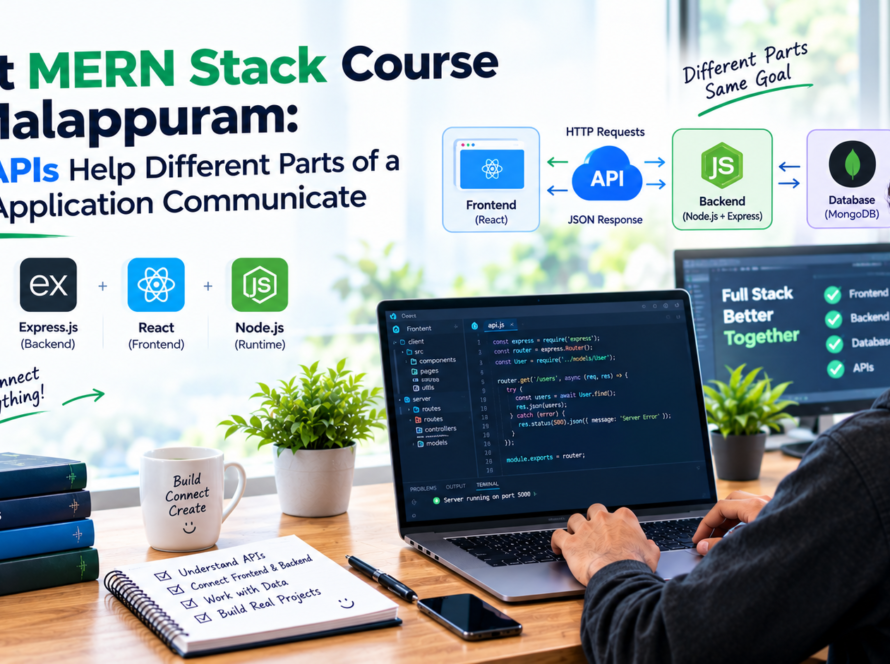
In a MERN application, errors can occur at different levels. React components may encounter unexpected states, Express.js routes may receive invalid requests, and database operations may fail.
Developers need to validate user input, handle failed requests, return appropriate HTTP status codes, and log useful diagnostic information. They should also avoid exposing sensitive details in error messages.
Testing different failure scenarios helps developers identify weaknesses before an application reaches its users.
Learn Through Real Development Challenges
When evaluating the Best MERN Stack course in Malappuram, look for a programme that gives learners opportunities to build applications, troubleshoot problems, and understand how frontend and backend components interact.
Ash Academy’s Advanced MERN Stack programme includes six months of training followed by six months of internship, providing a structured path towards practical development experience.
Learning to write code is only one part of development. Choosing the Best MERN Stack course in Malappuram should also involve considering how well the programme helps you practise debugging, improve application reliability, and approach real-world coding challenges.
Developers who learn to handle errors thoughtfully can build applications that are more reliable, easier to maintain, and more comfortable for users.