A web application may look like one complete product to the person using it. Behind the scenes, however, several components often work together to make everything function correctly.
A user might submit a form, search for a product, or sign in to an account. The application then needs to process that action, communicate with the appropriate system, and return the required information.
One technology that makes this communication possible is an API.
For students exploring the best MERN Stack course in Malappuram, understanding APIs is an important step towards learning how modern web applications work.
What Is an API?
API stands for Application Programming Interface. In simple terms, it provides a structured way for different software components to communicate with one another.
Consider an online shopping application. When a customer opens a product page, the frontend needs product information such as the name, price, and availability.
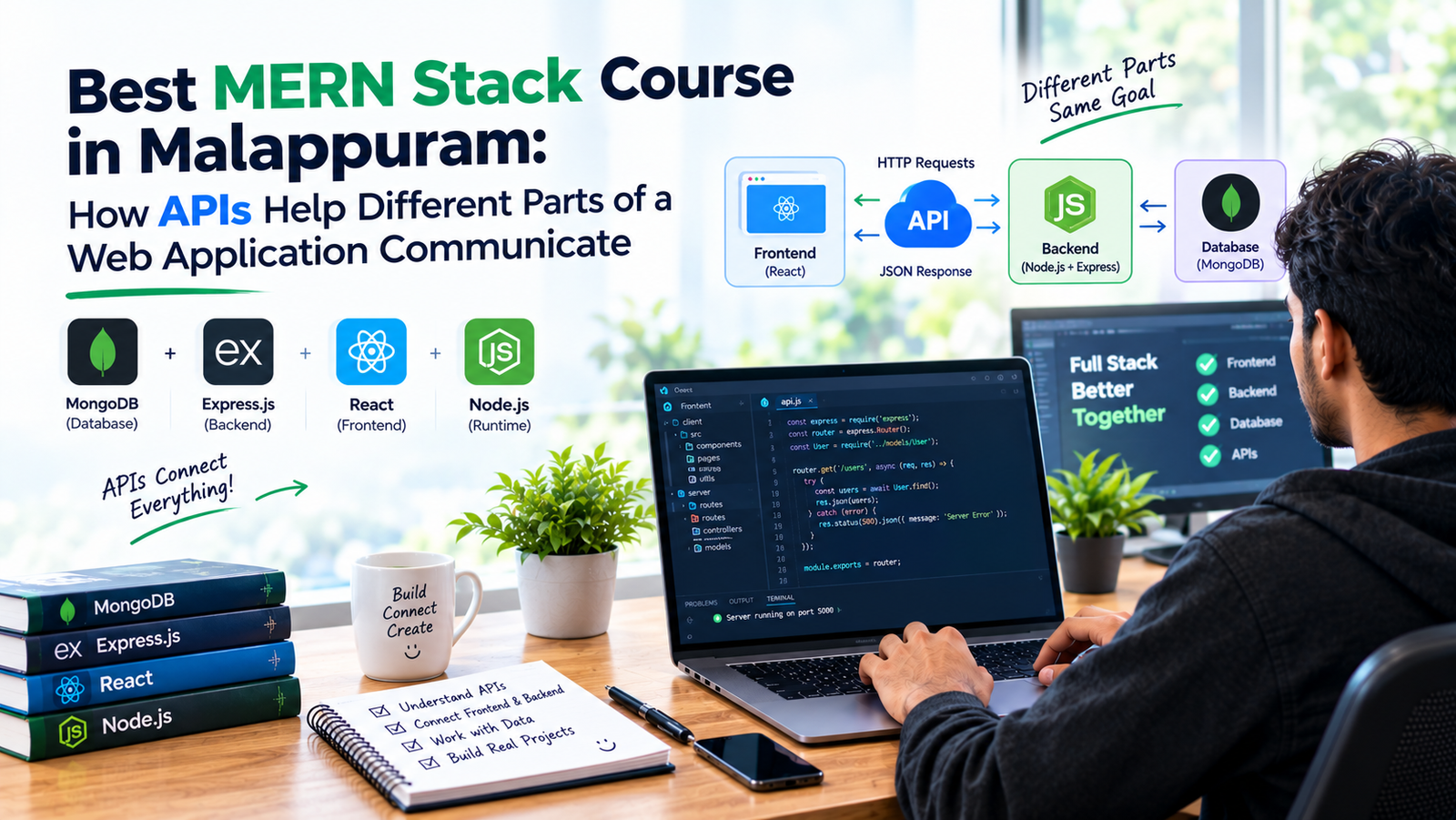
An API can allow the frontend to request that information from the backend, which may retrieve it from a database and return an appropriate response.
This communication happens behind the scenes, allowing users to interact with the application without needing to understand its internal structure.
Where APIs Fit Into MERN Stack
MERN Stack combines MongoDB, Express.js, React, and Node.js to support full-stack web development.
React is commonly used to build the user interface. Node.js and Express.js can handle server-side logic and API requests, while MongoDB can store the application’s data.
APIs connect these different parts by defining how requests and responses are handled.
For example, a task management application might use an API to create a new task, retrieve existing tasks, update a deadline, or delete a completed item.
Why Students Should Learn APIs Through Projects
Reading an API definition is useful, but working with one provides a much clearer understanding.
Students can begin with simple requests and gradually learn how to handle responses, manage errors, validate input, and connect backend functionality with a frontend interface.
These exercises also introduce important concepts such as HTTP methods, status codes, authentication, and data exchange formats.
Understanding these concepts helps learners see how individual programming skills come together in a working application.
What to Look for in a MERN Stack Course
When searching for the best MERN Stack course in Malappuram, students should look for a programme that covers more than basic syntax and isolated coding exercises.
Practical projects, API development, database integration, debugging, and mentor guidance can help learners build a stronger technical foundation.
At Ash Academy, the Advanced One Year MERN Stack Program combines six months of training with six months of internship experience. The programme also includes communicative English, confidence-building activities, mock interviews, and placement-focused support.
Learning How Applications Work Together
Understanding APIs helps beginners move beyond designing individual pages and start thinking about complete software systems.
As students build more projects, they begin to understand how the frontend, backend, and database communicate to deliver a smooth user experience.
For anyone planning a career in web development, this knowledge is an important part of developing practical full-stack skills.